Watching an electricity bill climb month after month is enough to make any factory owner or facility manager lose sleep, especially when a chunk of that cost comes from just trying to keep large spaces cool. That frustration is fair, since running big ceiling fans and air conditioning around the clock adds up fast without giving much control back to the people paying for it.
That’s why HVLS fans have quietly grown far smarter, and understanding this shift could genuinely change how a facility manages both comfort and cost.
From Basic Ceiling Fans to Smart Building Solutions
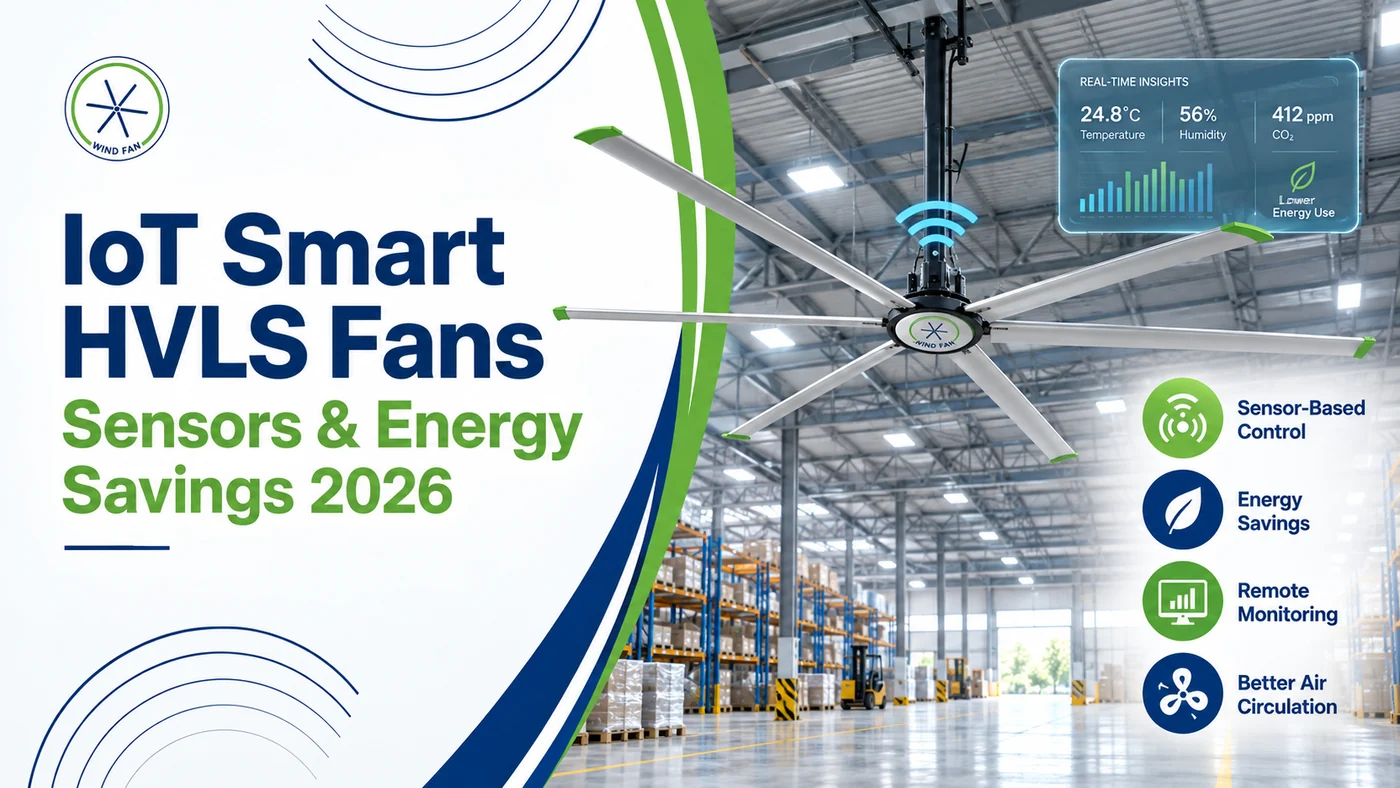
Modern HVLS fans have ceased to be simply devices with a single speed of operation. Contemporary HVLS systems are connected and utilise sensor data to make automatic changes in the speed of fans, direction, and runtime depending on conditions, instead of functioning always at maximum capacity.
How Do Sensors Help to Save Energy?
There are several mechanisms behind energy savings, which occur due to the interaction of those three components. Firstly, smart fans reduce the load of the air conditioning system by creating better air circulation and preventing thermal stratification so that the thermostats can be adjusted to higher values without any impact on people’s comfort. During winter conditions, the reverse rotation of fans allows moving the warm air, accumulated in the upper part of the space, to the bottom of the premises.
Secondly, occupancy sensors help to use fans at their maximum speed only in occupied areas to save energy on non-occupied ones. And thirdly, a fan’s energy consumption depends on its speed cubically, which means that small changes in speed allow achieving considerable savings.
According to industry data, IoT-based solutions can save from 15 to 30% of energy, with certain configurations having even greater results. The payback period is less than a year on larger campuses.
Implications for Facility Managers
For facility managers, it means that using these technologies results in lower electricity bills without any loss in the comfort of people and provides a more stable environment and fewer complaints about stagnation zones. The possibility to monitor the performance remotely through mobile apps or a dashboard allows keeping track of energy consumption and detecting faults before equipment failure.
Historical data about the runtime and environmental conditions can be used for maintenance and planning future improvements. For organisations that own many sites, it is possible to standardise on one platform to get uniform reporting.
Relevance for Facilities in India
Considering long cooling periods and increasing energy prices, small steps of improvement have special importance. Big warehouses and factories often face the problems of different temperatures in space and high costs for cooling; the intelligent HVLS fans solve these problems and contribute to sustainability goals.
Key Aspects of Choosing the System
Evaluate the presence of controllers, which can work with sensors; openness of the protocol (for example, BACnet or Modbus) for easy integration; reliable connectivity at the site; transparency of analytics; and reliable installation and maintenance.
Conclusion
IoT smart HVLS fans have moved well past experimental territory in 2026, turning into a practical, ROI-positive upgrade for large industrial and commercial spaces.
Wind Fan presents an intelligent and data-based method of energy-efficient cooling for facilities in India.
Feel free to contact Wind Fan to calculate your cost savings.