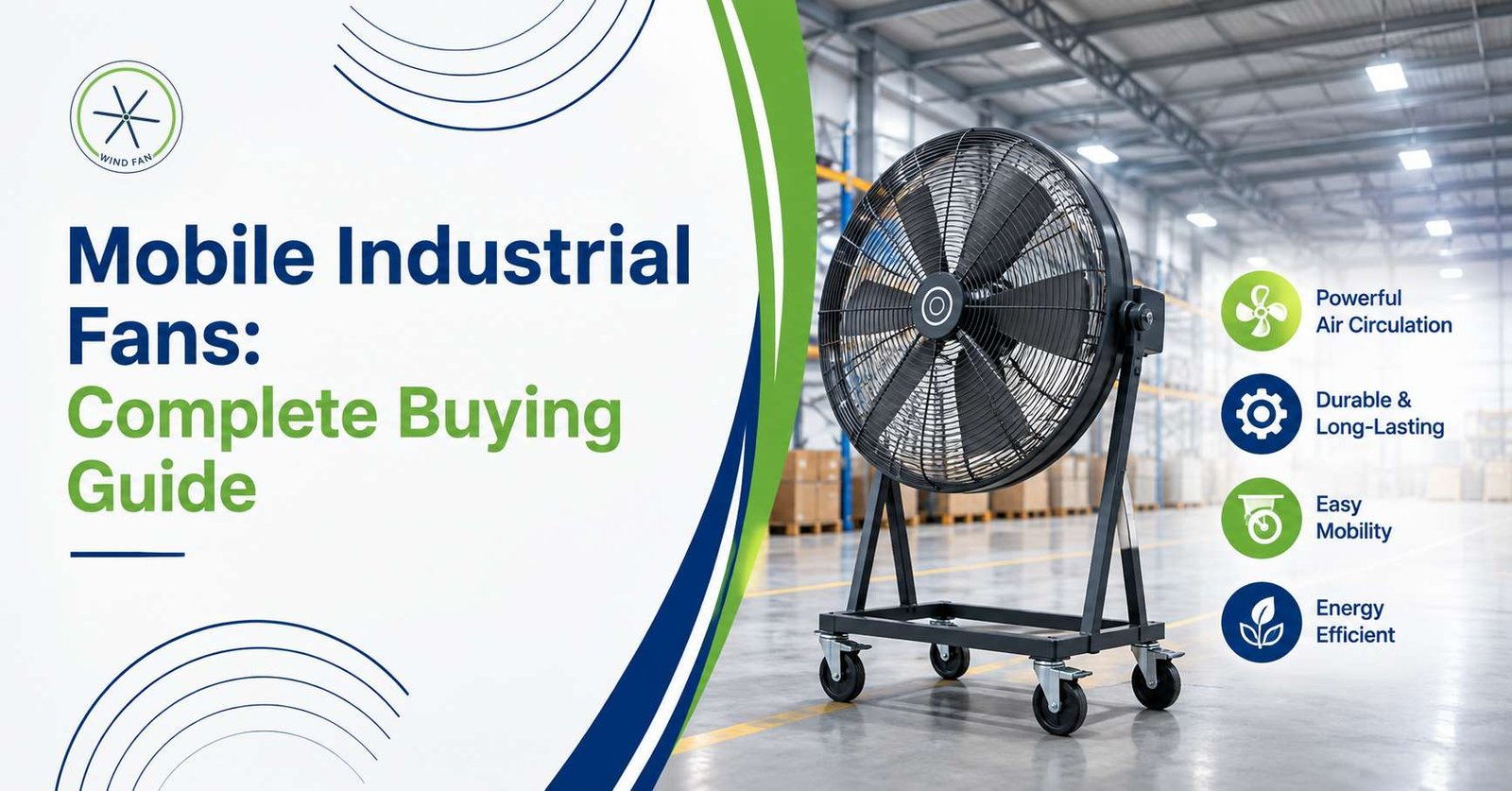
Heat inside a warehouse or workshop is more than an everyday discomfort. Stagnant air can make long shifts harder, especially when fixed ventilation does not reach busy work areas. If you are responsible for keeping a large facility comfortable, choosing another cooling solution can feel like one more technical decision on an already long list.
Fortunately, buying a mobile industrial fan becomes easier once you know what matters. Instead of simply choosing the biggest fan available, focus on airflow, coverage, mobility, safety, and your actual work conditions.
The right choice can move air exactly where your team needs it most.
Start With the Area Where the Fan Will Work
First of all, take into account where the fan will be used. There can be significant differences in the required airflow for different workstations (e.g., production line, loading bay, workstation in warehouse, or even outdoor industrial facilities).
You need to consider such factors as heat sources, existing ventilation system, number of workers, and operating schedule.
Match CFM to the Size of Your Workspace
CFM stands for cubic feet per minute, which is the usual measure of airflow. Bigger numbers mean higher air movement, but higher CFM alone won’t ensure good results in many cases.
What you need to consider is room volume, ceiling height, room layout, and the required air movement. High-ceiling areas usually require larger airflow, while smaller rooms can benefit more from proper circulation.
Determine the Fan’s Coverage and Effective Air Throw
Coverage determines the area that is covered by the fan’s influence, while air throw shows how far its airflow can move.
Various obstacles, such as racks, machines, partitions, and stored goods, may interrupt circulation. Thus, a few properly positioned mobile fans will often do a better job than one oversized fan. Proper positioning can also provide an opportunity for cross-ventilation rather than just spreading heated air around.
Pick a Fan Easy to Be Moved Around
Obviously, this feature is what makes the fan mobile. Pay special attention to wheels, locks, handles, frame durability, and fan weight.
Heavy-duty castors may simplify moving the device across the industrial floor. Meanwhile, locking wheels will allow you to fix it during operation.
Finally, see that the fan does not interfere with passages, exits, forklift routes, or other emergency equipment.
Evaluate Motor Quality and Fan’s Safety Features
The quality of the motor affects the energy consumption, service life, and performance of the fan. You need to compare speed settings, protection against overheating, voltage, plug type, cable length, and control system.
Variable speed settings may prove helpful when airflow changes over a working shift. For harsh environments, you will need a protected control panel and a durable motor.
Safety features should not be neglected as well. Strong guards, robust fasteners, a stable frame, properly protected wiring, and a control system located away from moving parts are all things to look for.
Pay Attention to Noise, Maintenance, and Long-Term Costs
Mobile industrial fans with high output will probably produce more noise. It can be crucial if the staff need to communicate or if there are customers near the fan.
Before buying the fan, examine cleaning requirements, bearing maintenance needs, spares availability, service period, and warranty terms. Don’t forget to compare the energy consumption and expected service life of the units.
Make Your Choice Count
A proper mobile industrial fan should suit the specific conditions of your working space, provide the necessary airflow, and suit operating environment and mobility requirements.
You can buy various mobile industrial fan models, including heavy-duty mobile fans, at Wind Fan. Contact Wind Fan to discuss your workspace and find the right air-movement solution for your business.