
Improve Productivity and Reduce Energy Costs in Industrial Facilities
The high-volume, low-speed (HVLS) fans we design and manufacture do far more than simply move air. They efficiently circulate large volumes of air to improve overall environmental balance within industrial facilities. By creating a gentle, continuous airflow—often referred to as a floor jet—our industrial HVLS fans help maintain even temperatures, protect product quality, prevent spoilage, and enhance employee comfort.
In addition to temperature control, hvls fans provide wide-area coverage that helps reduce excess moisture in the air. This keeps floors drier and safer, lowering the risk of slips while supporting healthier working conditions across warehouses, factories, and production units.
By improving air movement, HVLS fans can lower perceived temperatures by up to 5–6°C, creating a noticeably cooler and more comfortable environment. The gentle breeze feels natural—similar to coastal airflow—without the discomfort of high-speed conventional fans.
HVLS Fans for Industrial Facilities
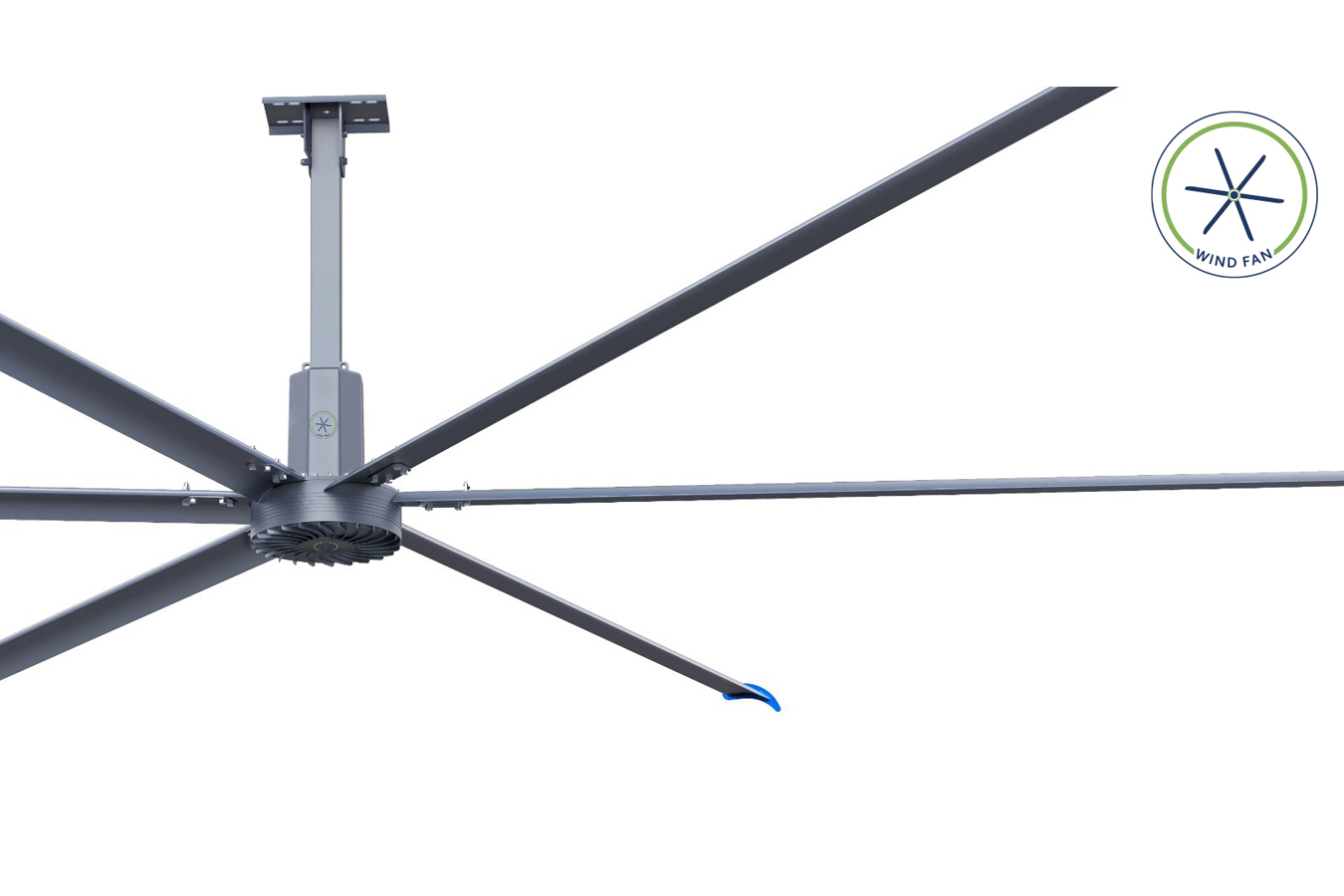
HVLS fan - Wind- 7
Best for: Large concourses, baggage halls, cargo sheds, hangars
HVLS fan - Wind- 6
Best for: Check-in halls, lounges, food courts, terminal zones
HVLS fan - Wind- 5
Best for: Medium-large airport zones, MRO areas, service halls
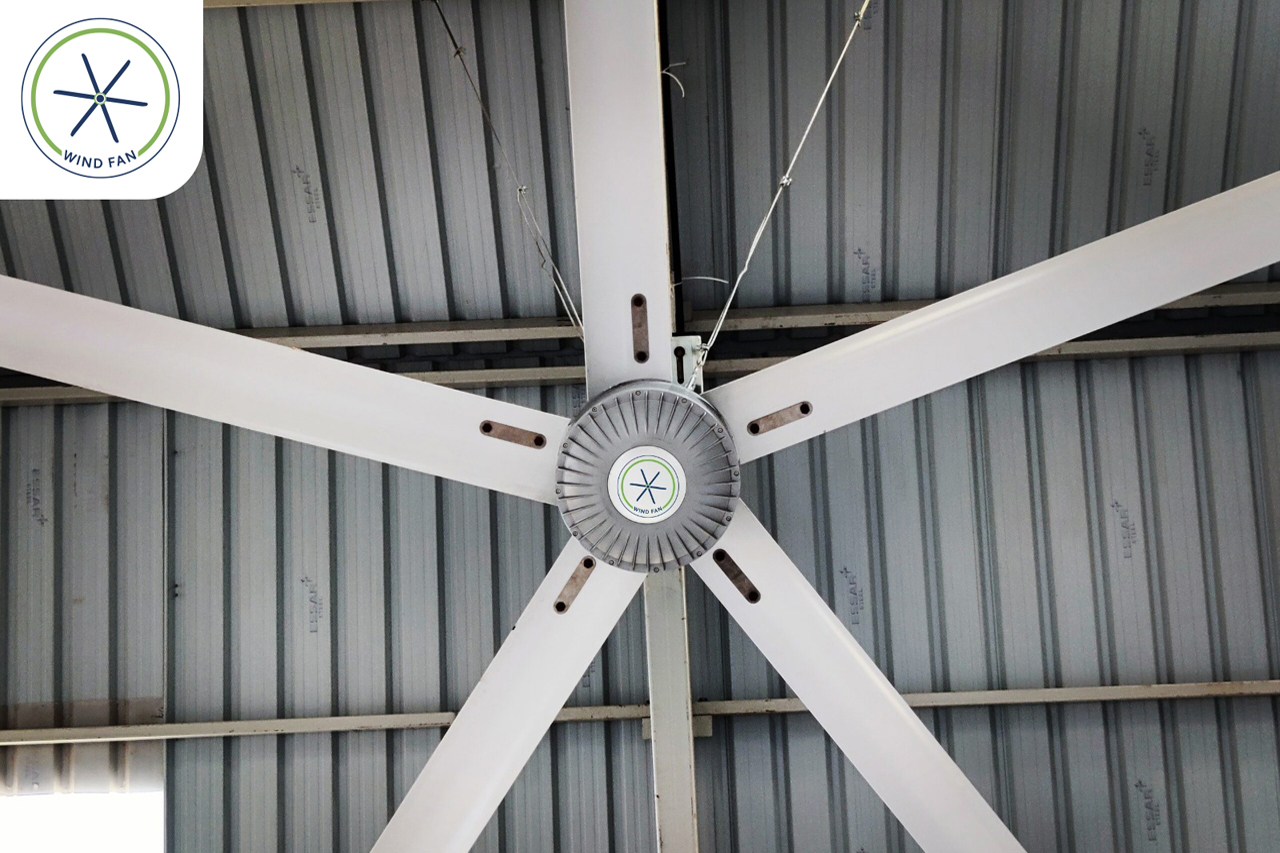
How HVLS Fans Help in Industrial Facilities
HVLS fans use large-diameter blades to move a high volume of air at low speeds, creating uniform airflow across expansive industrial spaces. This improves comfort, enhances air circulation, and reduces hot spots and “dead zones” in high-ceiling areas such as factories, warehouses, and production units. The result is a more comfortable, productive, and energy-efficient environment for workers with consistent airflow throughout the facility.

How to Choose the Right Industrial HVLS Fan
Selecting the right HVLS fan depends on ceiling height, floor area, HVAC integration, noise requirements, and operational duty cycle.

Ceiling Height & Clearance
Choose the appropriate fan size based on ceiling height and ensure safe mounting clearance for industrial environments.

Zone Size & Workforce Density
Fan coverage should align with the total area (sq. m) and the number of workers or equipment generating heat.

HVAC Layout & Airflow
Position HVLS fans to complement HVAC systems, improving airflow direction, circulation, and temperature balance.

Noise Levels & Duty Cycle
Select low-noise models for occupied work areas and heavy-duty fans designed for continuous industrial operation.
What clients Say About Us
Trusted by Industry Leaders






Industrial HVLS Fans – Frequently Asked Questions
HVLS fans are ideal for manufacturing plants, warehouses, production floors, maintenance areas, logistics zones, and distribution centers.