
Enhance Comfort, Safety, and Productivity with HVLS Fans
Large indoor spaces are a critical part of automobile manufacturing and service facilities, where workers operate heavy machinery under varying temperature conditions. Heat generated from engines, welding, painting, and mechanical processes—combined with fumes and frequent opening of large garage doors—makes temperature control a constant challenge. This often results in excessive energy consumption and uneven cooling across the facility.
Without proper air circulation, these conditions can lead to uncomfortable work environments, poor ventilation, and inconsistent airflow. This is where High Volume Low Speed (HVLS) fans for automobile facilities provide an effective solution. By moving large volumes of air at low speeds, HVLS fan help improve air quality, regulate temperature, and create a more comfortable environment for both workers and customers.
HVLS Fans for Automobile
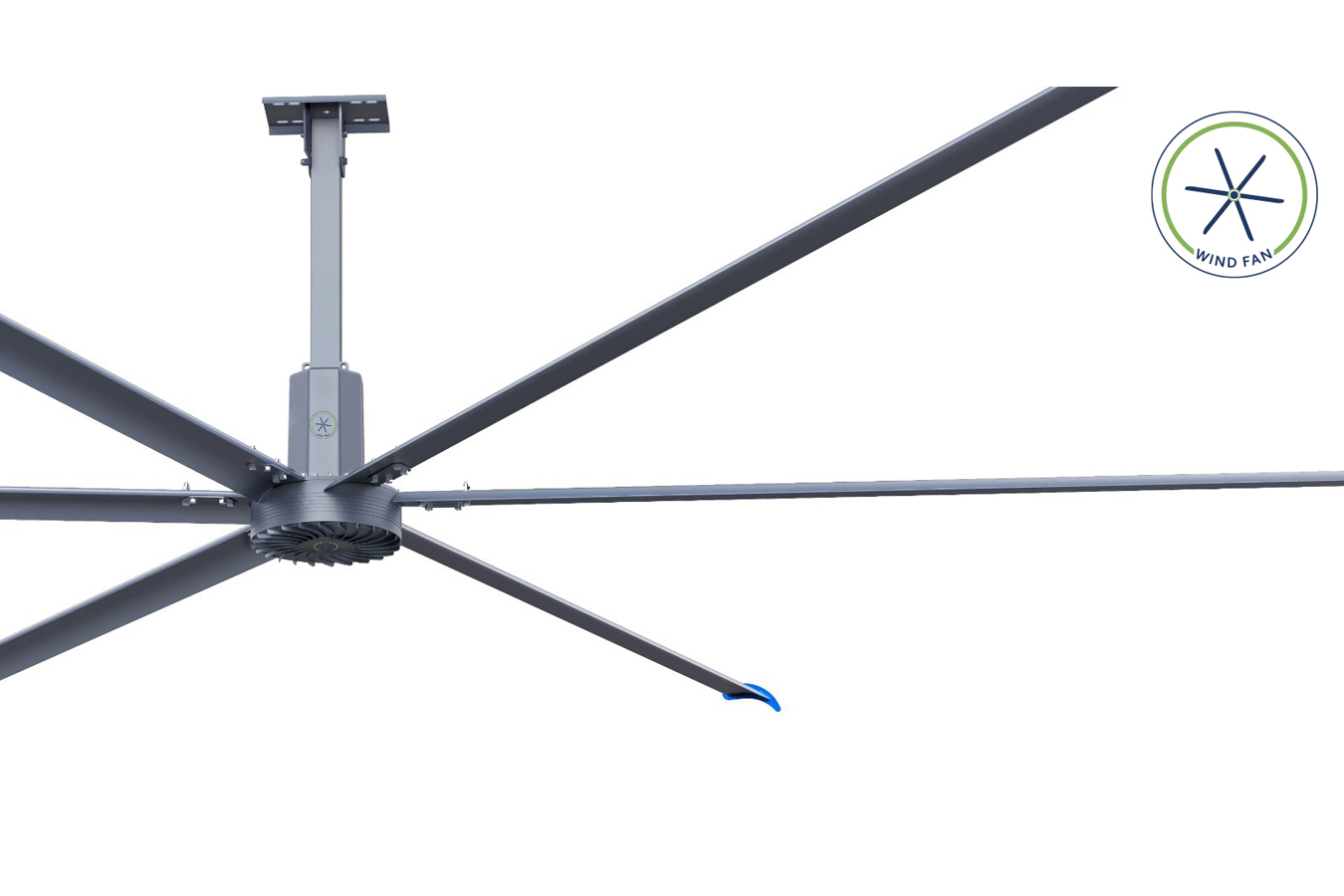
HVLS fan - Wind- 7
HVLS fan - Wind- 6
HVLS fan - Wind- 5
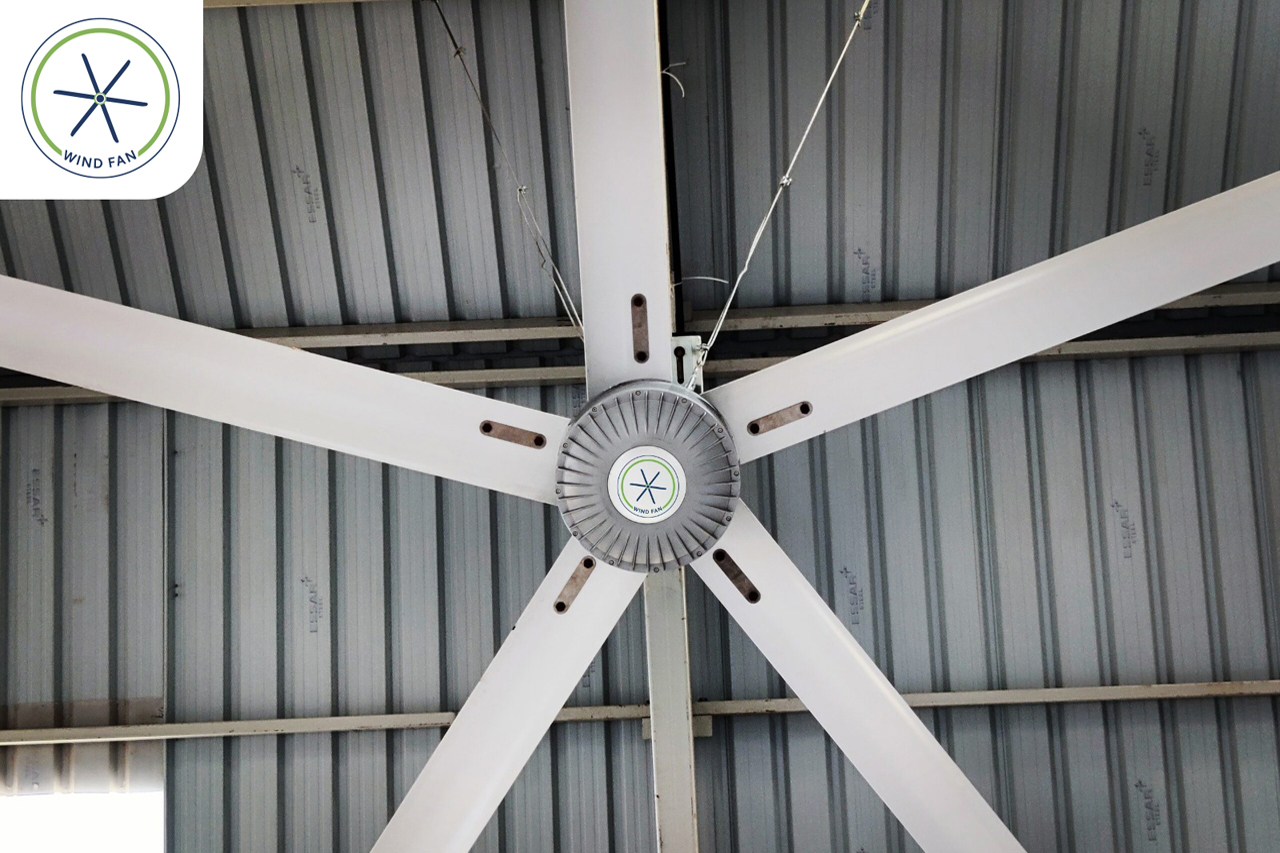
How HVLS Fans Help in Automobile Facilities
HVLS fans use large-diameter blades to move a high volume of air at low speed, creating consistent, wide-area airflow across automobile facilities. This helps disperse heat, fumes, and airborne particles generated by engines, welding, painting, and mechanical operations.

How to Choose the Right Automobile HVLS Fan
Selection depends on ceiling height, work zone size, heat load, ventilation needs, and operating hours.

Ceiling Height & Clearance
Match HVLS fan size to ceiling height while maintaining safe clearance above machinery, vehicle lifts, lighting, and workstations.

Zone Size & Work Density
Fan coverage should align with floor area, workstation layout, and worker density to ensure uniform airflow across production and service zones.

Ventilation Layout & Airflow
Position HVLS fans to support natural ventilation and existing exhaust or HVAC systems, improving heat and fume dispersion.

Noise Levels & Duty Cycle
Choose low-noise HVLS fans for customer-facing service areas and heavy-duty models for continuous operation in manufacturing environments.
What clients Say About Us
Trusted by Industry Leaders






Automobile HVLS Fans – Frequently Asked Questions
HVLS fans work best in assembly lines, service bays, paint shops, testing areas, warehouses, and other high-ceiling automotive spaces where uniform air circulation is required.