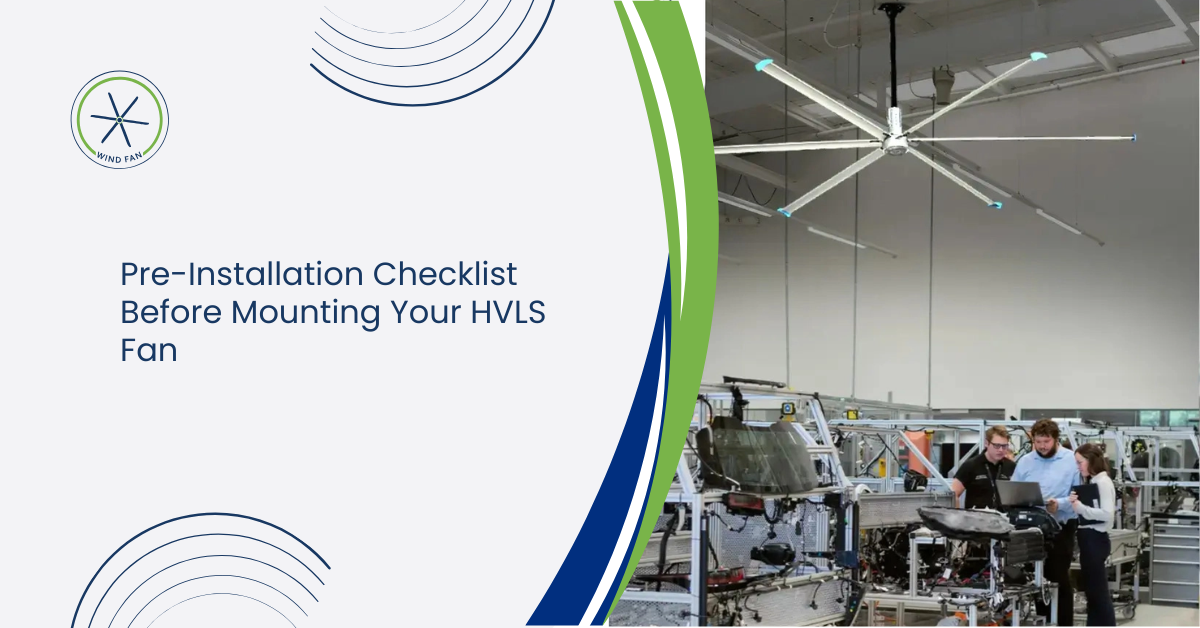
Installing an HVLS fan is a smart decision. These high volume low speed fans improve air flow, reduce heat stress, and can help lower energy costs in large spaces like warehouses and factories. But before the fan ever goes up, there is one critical step many people overlook: proper pre-installation planning. You must know that the hvls fan is a large, powerful, and heavy. If you rush into installation without checking the basics, you might face vibration Issues and also poor air flow.
Why does the pre-installation checklist matter?
HVLS fan is not like normal ceiling fans. It requires strong structural support, proper electrical planning, and safe clearance from obstacles, besides accurate measurements and skilled installation planning. Skipping the checks might lead to costly rework, reduced performance, or long downtime. A few hours of preparation can save you a lot of time.
Confirm your building structure is reliable
Before anything else, you must verify that your structure is perfect enough to support the fan. HVLS fans are heavy, and the mounting point must handle static load. You need to check whether you’re building steel beams and approved trusses. If you are unsure, you can even consult A structural engineer before proceeding.
Measures ceiling height carefully
Ceiling height plays a big role in fan performance and safety. Most fans require a minimum ceiling height of 12 to 14 feet and an optimum height of 20 to 30 feet, depending on the blade size. You need to make sure that you measure from the floor to the mounting point, not just the roof height.
Check clearance around the fan area.
The fan needs open space to operate safely. Before installation, confirm the clear distance from lights and beams. You should maintain minimum clearance as recommended by the manufacturer.
Verify electrical power availability.
Before installation day, you need to confirm that the power supply is ready, check for the correct voltage and phase of the dedicated power line, and ensure proper earthing or grounding. The fans typically require industrial-grade electrical connections. You must always ensure proper writing, and it must align with the local electrical safety codes.
Plan controller and wiring routes
You need to decide in advance whether the controller will be mounted by an expert or by your own team. How cables will turn from the source to the fan, and whether cable trays are required.
So above all, you need to know that installing an hvls fan is a long-term investment in comfort and energy efficiency. But the success of that investment depends heavily on what you do before installation, not after. When your foundation is right, your HVLS fan will perform smoothly and effectively for years to come.